
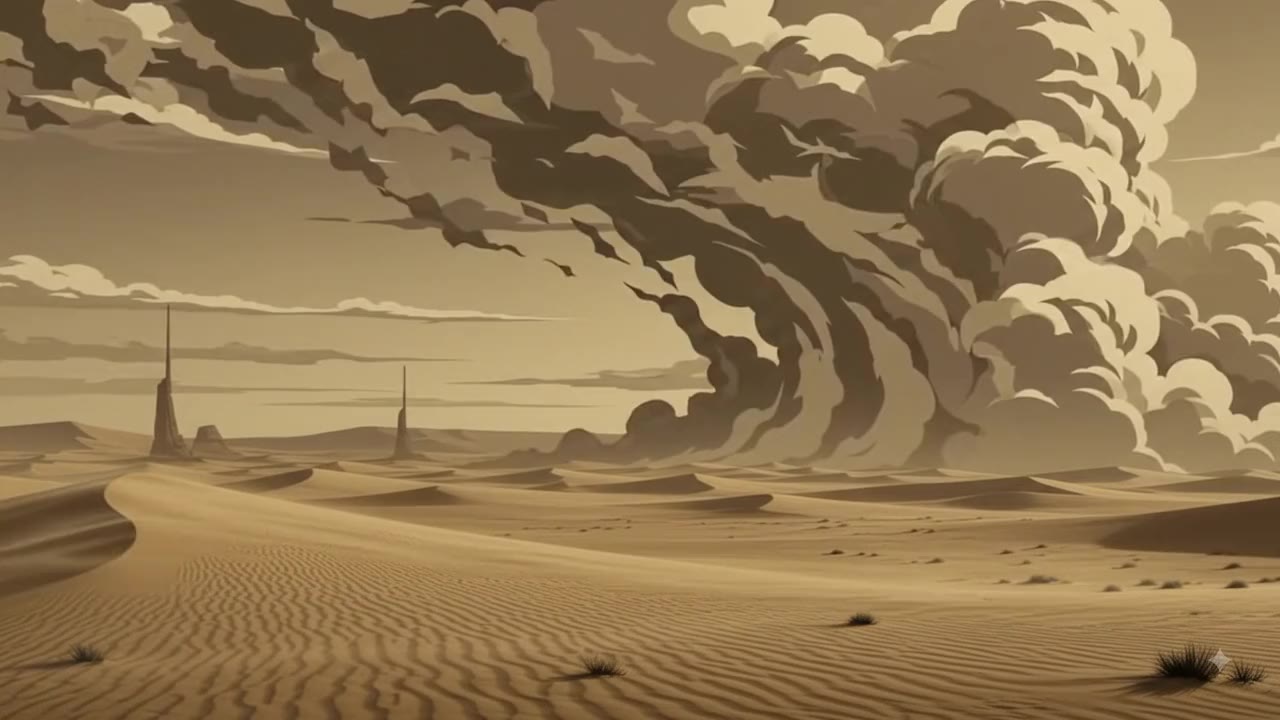
It started the way a lot of things start now: YouTube recommended me a video I hadn’t asked for. It was from MCDM, a group playing the Dune board game, and the thumbnail looked strange enough that I clicked.
I wasn’t new to board games. I had been part of an in-person board game group for years, and I was already playing on Tabletop Simulator: Secret Hitler, Codenames and plenty of others. I knew what a good game night felt like. What I didn’t know yet was what I was missing.
Would this play differently against a computer?
Our in-person group mostly played Euro-style games. You know the kind: a score track running around the edge of the board, worker placement, everyone quietly optimising their own little engine. I liked those games, and I still think playing board games together is great fun, even the ones with little interaction. But it was the group that kept me coming back, not the games.
The games that did pull me in were the ones where the other players were the game. Where you spent the evening talking, reading the table, and trying to work out what everyone else wanted.
One evening made this click for me. I mentioned that I was having a hard time figuring out who was ahead. Another player told me that was by design: you weren’t supposed to be able to tell. That stuck with me. I asked myself whether the game would play any differently if I were playing it against an AI, and I realised it really wouldn’t change at all.
Unbalanced, and proud of it
So when that MCDM video came along, I was completely captivated. The game was openly unbalanced. Every faction broke the rules in its own way. The board looked wild. It didn’t look like any game I had ever played.
I knew of Dune, but I had never read the books. My Dune was Dune 2000, the Command & Conquer-style strategy game, and a viewing of the David Lynch film that hadn’t meant much to me at the time. That video changed it. It sparked an interest in the Dune universe, in the board game, and honestly in board games in general.
I watched two or three of their Dune let’s-plays back to back. Then I went looking for people to play with.
Finding the table
I found the Dune Discord server, joined my first game, and I was hooked from that moment.
The timing helped. This was in early 2020, right around when Covid arrived, and a lot of people suddenly had a lot of time on their hands. The servers were full, games ran constantly, and we had a really good time.

Where the cracks showed
After twenty or thirty games on Tabletop Simulator, the cracks in the design started to show.
There were already several rule sets around: the World Boardgaming Championships (WBC) rules, the original Avalon Hill rules, and the GF9 rules. The GF9 rule set left a lot of questions open. Working out exactly how two advantages interacted was always a puzzle. Often the rulebook simply didn’t say, and even when we asked the designers directly we sometimes got conflicting answers.


I also learned how much one rule can change a game. The MCDM video that got me hooked didn’t play with spice dialing, the rule that has you add spice to your battle wheel. I’ve since come to see it as one of the important parts of Dune’s skill ceiling.
Improving the game we love
I’ve kept playing Dune ever since, and my ambition has always been to fix the rule set I play with the people I like to play with.

But I also love sharing and experimenting. GF9 started releasing FAQ documents that explained, and sometimes quietly changed, their rules. Meanwhile the group I played with started writing a rule set of our own: Dreamrules.
Dreamrules was a group effort, and I played a small part in writing it. Where I couldn’t let go was how the game looked. Changing the rules meant changing the pieces, and for a while that meant tokens and cards scribbled over in MS Paint.
I didn’t want to play with that. I wanted the board, the cards, the tokens and the rulebook to look like they belonged together, as if Dreamrules had come out of the same box as everything else.
I also wanted a Tabletop Simulator mod, in which all those assets could be used together seamlessly, which I talk about in the next post.
